New, Waxing, Full & Waning Moon: What Each Phase Means
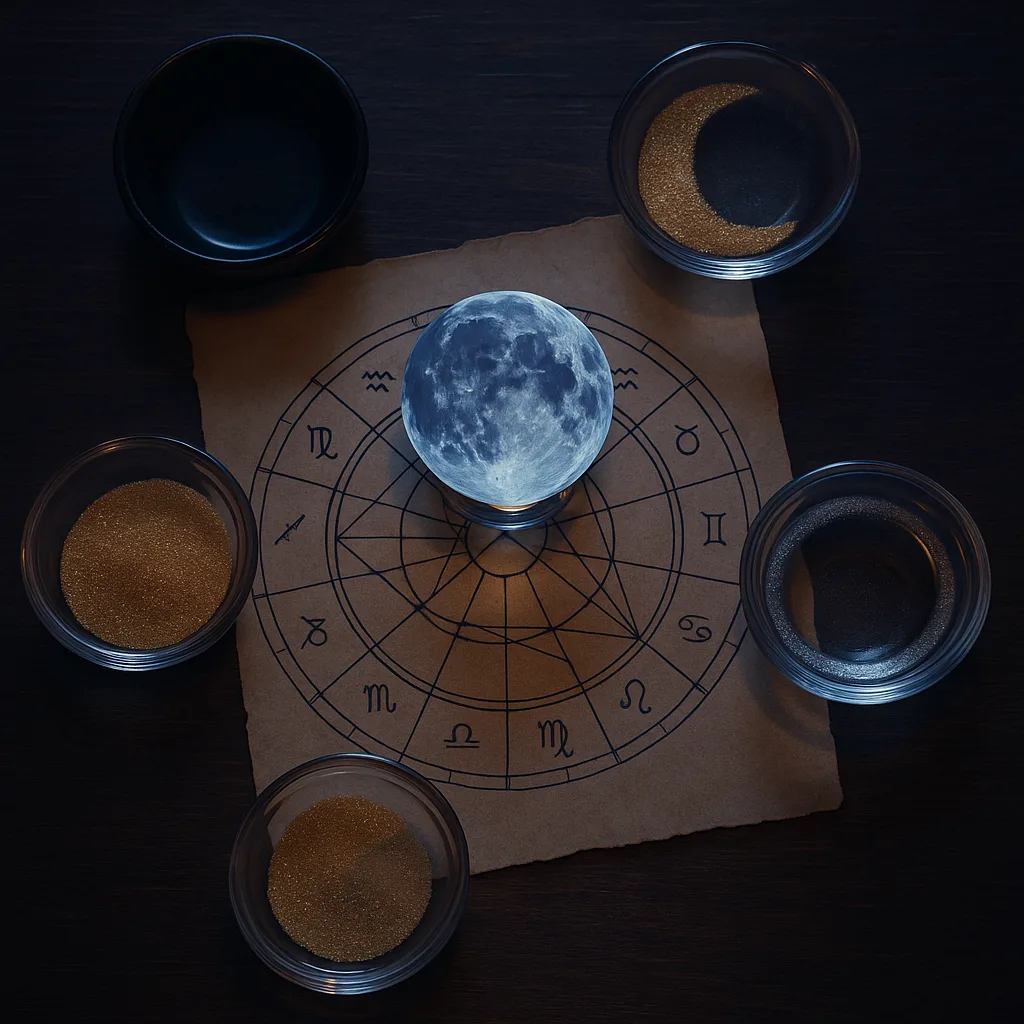
A clock that has been turning for billions of years
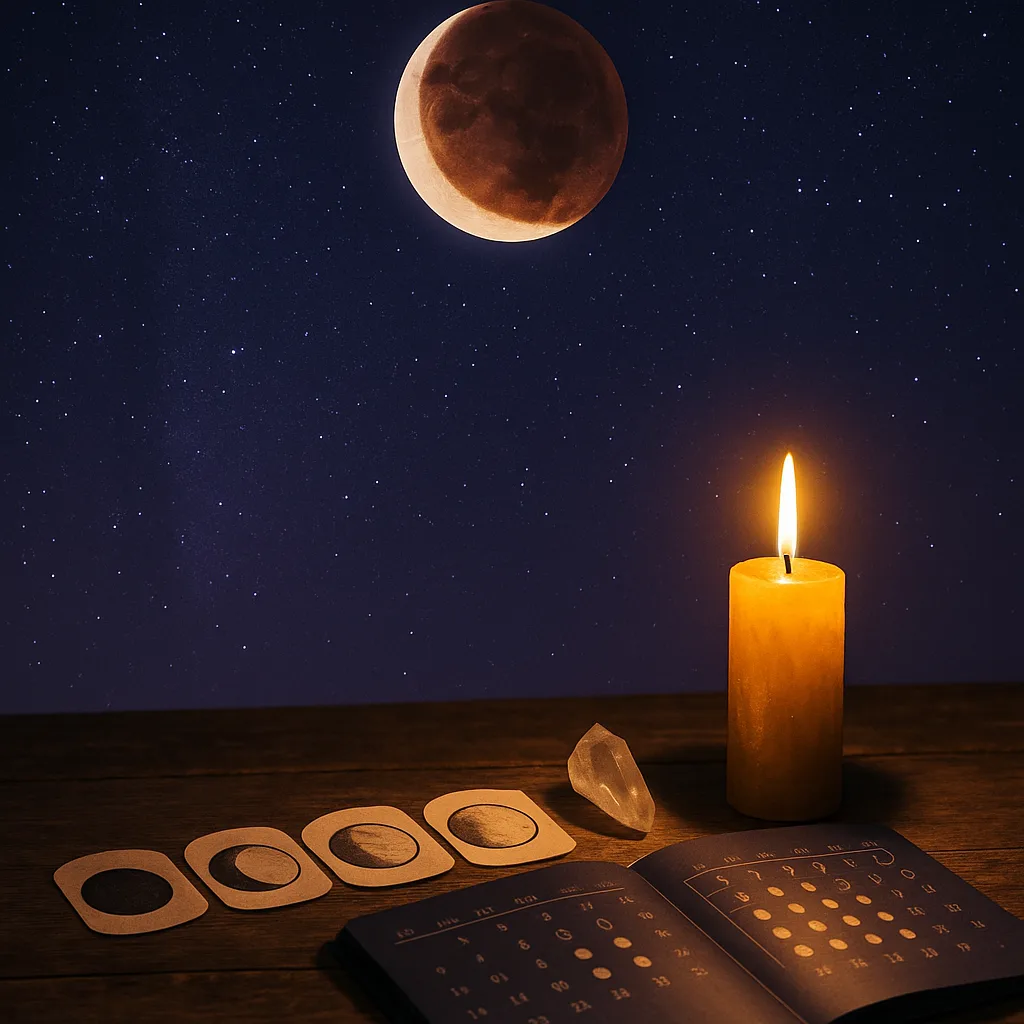
Every night, the Moon shifts shape slightly in the sky. Not because it physically changes, but because sunlight hits it differently depending on where Earth, the Moon and the Sun happen to be positioned. This full cycle takes about 29.5 days, known as a synodic month, and within it sit the four phases anyone can recognize at a glance: New, Waxing, Full and Waning, each lasting roughly seven and a half days before giving way to the next. In August 2026, for instance, the sky will move through Last Quarter on the 5th, New Moon on the 12th, First Quarter on the 19th, and a Full Moon nicknamed the Sturgeon Moon on the 28th, accompanied by a partial lunar eclipse.
Behind this astronomical machinery, astrology sees something else: an emotional storyline that repeats every month, inviting anyone watching the sky to reflect on their own cycles, the ones in nature, in the body, in life's projects. Here's what each phase tends to symbolize, keeping in mind that this is a poetic reading of the sky, not an exact forecast of what will happen.
What the Moon represents before it even changes phase
Before going phase by phase, it helps to remember what the Moon symbolizes regardless of the day of the month. In nearly every astrological tradition, it's associated with the receptive principle, the yin to the Sun's yang, and therefore linked to water, night, the unconscious, fertility and the body's rhythms. If the Sun represents conscious will and what we show the world, the Moon speaks to the emotional life running underneath: what we feel without necessarily being able to explain it, the habits that nourish or drain us, the way we care for ourselves and others. That's why, in a birth chart, it's usually tied to emotions, memory, eating habits, sleep and our relationship with the public, everything that pulses, rises and recedes like the tides.
This backdrop is what gives meaning to the four phases. They aren't just geometric positions, but stages of an emotional process anyone can recognize: planting something, watching it grow, harvesting the result, and letting go of what has already served its purpose.
New Moon: the moment the sky goes quiet
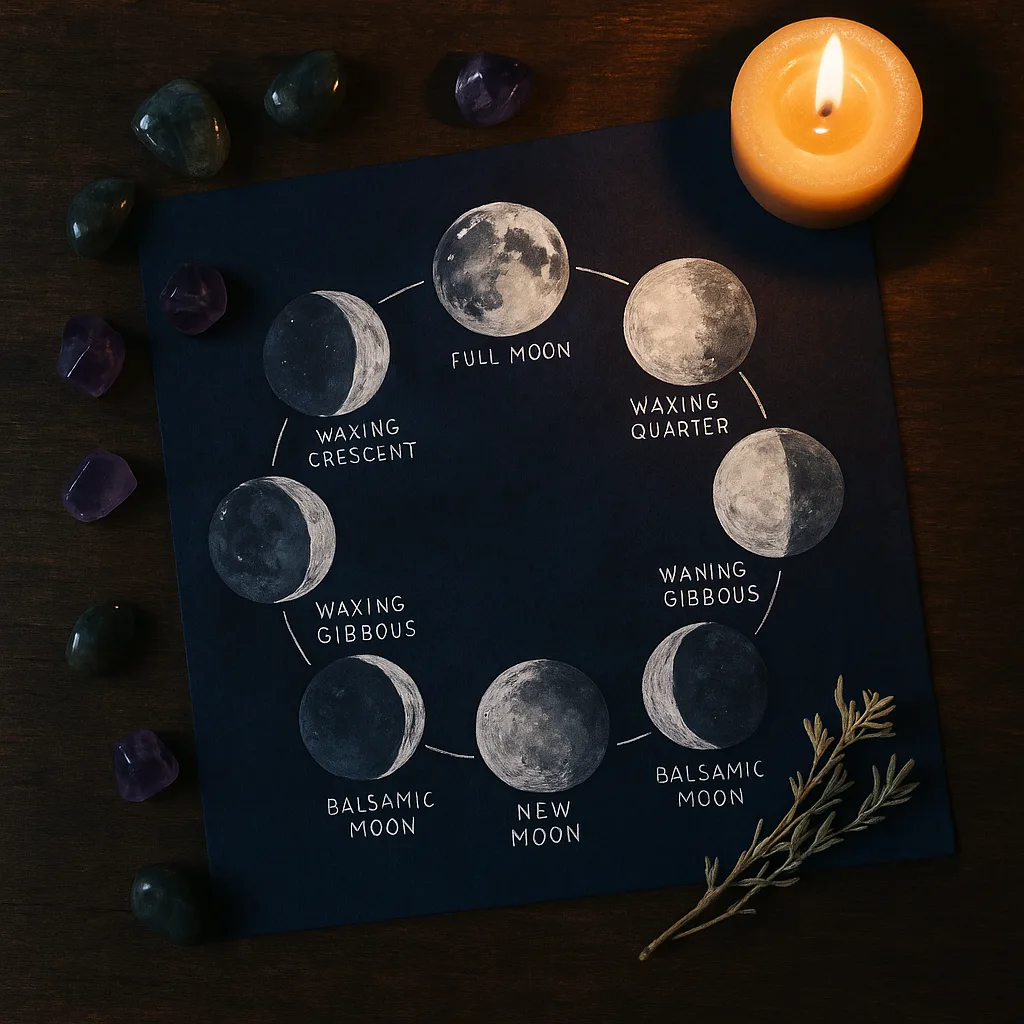
During the New Moon, the illuminated hemisphere faces away from us, which is why it practically vanishes from the night sky. Symbolically, this blackout is read as an invitation to begin again: it's the phase associated with planting intentions, starting projects and making plans for the cycle ahead, still free from the pressure of results. In older symbolic traditions, the New Moon also appears linked to fertility, the idea of ground made ready to receive a seed before any visible sign of life. It's no accident that writing down intentions or performing small rituals on these nights has become popular, not because the invisible moon holds some automatic magical power, but because it works as a symbolic marker for organizing what you want to prioritize in the month ahead.
Waxing Moon: when the seed takes shape
As the illuminated face grows larger, we enter the Waxing phase, the stretch between New and Full. Astrologically, it's read as the stage of growth, action and expansion: the moment to move from planning to doing. If the New Moon was about deciding what you want, the Waxing Moon is when that starts to take shape, the first steps of a project, sustained effort, the energy available to keep pushing forward. Astrologers often cite it as the most favorable phase for putting ideas into practice, precisely because the light, and symbolically the available energy, is on the rise rather than fading.
Full Moon: the peak that's also a mirror
When the visible face is fully lit, the cycle reaches its most intense point. The Full Moon is associated with culmination, the moment when whatever was planted at the New Moon and nurtured during the Waxing phase reaches its peak visibility, for better or worse. It's also the phase most tied to emotional intensity: it's no coincidence that people often report restless sleep, raw sensitivity, or situations that seem to boil over right around these days. Astrologers often describe this phase with the image of a thermometer: the Full Moon reveals what had been building up, showing clearly what no longer fits inside us, a grievance, a joy, a truth demanding to be spoken. It's a phase of seeing things sharply, even when the scene revealed isn't always comfortable.
Waning Moon: the invitation to let go
After peak brightness, the light begins to recede, and the Moon enters its Waning phase, the journey back toward disappearing again. Symbolically, this is a period of review, closure and clearing out: the time to identify what has already served its purpose in the cycle and can be left behind, whether that's a habit, a worn-out relationship, or a project that never got off the ground. Some symbol dictionaries use even stronger language, comparing this phase to the archetype of death, not as a literal ending, but as the inevitable stage of any living cycle, which must empty itself out in order to begin again. It might be the most underrated of the four phases: while the New and Full Moons get most of the symbolic attention, it's during the Waning Moon that the invisible work of organizing and letting go actually happens.
The phases between the phases
Between these four major markers lie intermediate stages that astronomy labels first quarter, waxing gibbous, waning gibbous and last quarter, and which more detailed astrological traditions, such as certain schools of Vedic and occult astrology, organize into eight named phases, including the so-called Balsamic Moon, the final days before the New Moon, sometimes nicknamed the Dark Moon by some esoteric traditions. This closing phase carries its own particular symbolism: a time of rest before the restart, when there's not yet enough energy to begin anything new, but also nothing left to do with the ending cycle, a pause that our fast-paced culture tends to ignore, but which the Moon insists on repeating every single month.
A rhythm to observe, not a ruler to judge yourself by
These readings are symbolic, not exact predictions. The Moon doesn't decide anything for anyone, but it offers a useful language for naming where we stand in a given process. Noticing a waning moon can simply be a way of giving yourself permission to slow down, reassess, or close something out without guilt, just as recognizing a waxing moon can be the symbolic nudge you needed to finally act on a plan. In August 2026, with a lunar eclipse coinciding with the Sturgeon Full Moon, the sky tends to amplify this invitation toward revelation and self-trust even further, but that's a story for another conversation, about what eclipses add to the ordinary lunar cycle.
Recomendado
Astro Reflexo
Descubra o que os astros revelam sobre quem você é. Em menos de um minuto, calculamos seu Sol, Lua e Ascendente com precisão astronômica e uma inteligência artificial escreve um resumo personalizado só para você.

Recomendado
MAPA ASTRAL E NUMEROLÓGICO PERSONALIZADO
Mapa Astral + Numerologia Um mergulho profundo na sua essência. E se tudo o que você procura… já estivesse dentro de você - esperando para ser revelado?

Recomendado
Manual Prático da Astrologia
O universo sempre exerceu um fascínio indescritível sobre a humanidade. De todas as suas maravilhas, a astrologia se destaca como uma antiga arte que tem intrigado e inspirado gerações.
Universo Astral Editorial Team · Tarot and moon transits
This article was produced by the Universo Astral editorial team, with AI tools assisting research and drafting and human review before publication. If you spot anything inaccurate or outdated, let us know at our contact email.