Mercury Retrograde Explained: Why It Scares Us and What to Do
One Car Passing Another on the Highway
Picture two lanes on a highway, both cars heading the same direction. You're in a faster car and you pass a slower one. For a moment, checking your rearview mirror, it looks like the car you just passed is moving backward, even though it's still moving forward, just more slowly. That's how a scientist at Johns Hopkins' Applied Physics Laboratory, which works with NASA, described the phenomenon known as Mercury retrograde. The planet isn't the one changing direction. Earth, orbiting the Sun faster, creates this optical illusion as it passes Mercury along its own orbit.
That simple explanation dismantles a lot of the drama around the topic, but it doesn't erase why it keeps fascinating, and unsettling, so many people. Two layers of truth run in parallel here: one astronomical, measurable and free of mystery, and another symbolic, built over centuries of watching the sky as a mirror of human experience. This piece looks at both without mixing them up.
What's Actually Happening Up There
Mercury is the fastest planet in the Solar System: its year lasts just 88 Earth days. Because it moves at such a different pace than we do, this apparent backward motion shows up from time to time when viewed from Earth. It happens three to four times a year, and each window lasts about three weeks on average. It's neither rare nor cosmic in any dramatic sense. It's a predictable orbital pattern that astronomers have calculated precisely for centuries.
Mercury isn't alone in this optical dance. Venus goes retrograde every two years for about 45 days, Mars every two and a half years for roughly two and a half months, and more distant planets like Saturn, Uranus, Neptune and Pluto spend a good chunk of the year in apparent retrograde motion. Since they're slower and farther from the popular news cycle, they rarely become the topic of a family group chat.
Why the Belief Took Hold
Scientifically speaking, there's no cause-and-effect relationship between Mercury's position and mishaps like lost emails, relationship spats, or a crashed computer. Astronomy experts tend to be categorical about this: the phenomenon is real as an apparent motion, but there's no physical mechanism that explains any impact on human behavior or technology.
Psychology helps explain why the idea feels so convincing in everyday life. It comes down to confirmation bias: once someone already believes Mercury retrograde brings chaos, they tend to notice and remember exactly the mishaps that occur during that period, while overlooking the calm days within that same phase, and the problems that pop up at any other time of year with no planet involved at all.
The cultural origin of this modern reputation is worth mentioning. In April 1979, the American newspaper The Baltimore Sun published an alarmist notice suggesting no one should start important projects while Mercury was retrograde, even mentioning magnetic storms. The idea gained traction in newspapers and popular horoscopes throughout that decade, and it surged again after 2009, when social media turned the topic into a running joke whenever something went wrong.
What Astrology Sees in This Movement
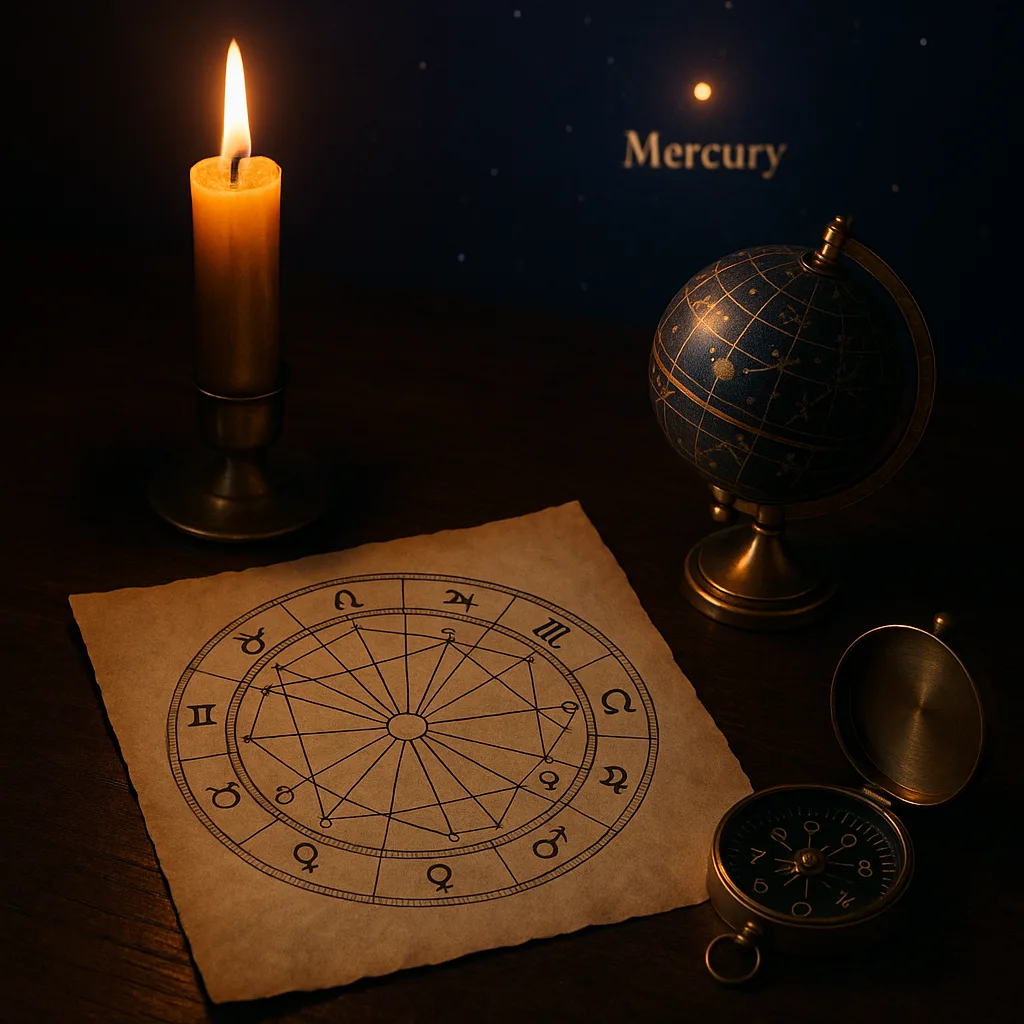
This is where the second, symbolic layer comes in, one that isn't competing with science, just speaking a different language. In astrological tradition, Mercury rules communication, reasoning, learning, travel, negotiations and the use of technology. When it appears to move backward, the symbolic reading isn't one of danger but an invitation to pause: the mental and communicative functions that usually turn outward start turning inward instead.
It's as if daily life loses a bit of outward speed to gain inner depth: time to review contracts, reread messages before hitting send, pick back up conversations left unfinished, reorganize your schedule, or rethink decisions made in a rush. Astrologer Alexey Dodsworth, from the Personare platform, points out that a sign, on its own, never goes retrograde. It's the planet passing through it that does. That's why an expression like Mercury retrograde in Aries, for example, suggests that this sign's impulsive, in-the-moment energy gets filtered through Mercury's tendency to review, asking for more caution before acting or speaking on impulse.
Which area of life feels the strongest pull during this phase depends on the astrological house in each person's chart that Mercury is moving through at the time. That's why two people can experience the same transit in completely different ways, one feeling it more at work, another in relationships or finances.
The Shadow Period: The Detail Few Explain Properly
One of the most interesting aspects, and one of the least known outside deeper astrology circles, is the so-called shadow period. About two days before the retrograde begins and two days after it ends, Mercury goes stationary: it appears to stop in the sky, neither advancing nor retreating, as if hesitating before changing direction.
In traditional astrological reading, it's precisely during this transitional window that effects tend to announce themselves most strongly, often even before the planet officially goes retrograde, and still lingering a bit after it resumes direct motion. That's why those who follow ephemerides closely prefer to widen the window of caution, rather than treating the start and end of the retrograde like an on-off switch.
How to Get Through This Phase Without the Drama
Whatever each reader believes about cause and effect, astrological tradition has built up a practical list of precautions over time that make sense even from a standpoint of pure common sense. It's worth considering:
- Reread before you hit send: important emails, messages and proposals deserve a second read-through before going out. It costs nothing and prevents most of the misunderstandings usually blamed on the transit.
- Back up your devices: technical glitches happen all year round, but using this period as a reminder to save files and update systems is just good practical care.
- Double-check schedules and appointments: rescheduling, delays and last-minute changes get a reputation for being more common during this phase. Checking everything twice reduces friction.
- Avoid signing contracts in a rush: if possible, review the fine print with extra care, looking for details that might slip by unnoticed at any other time.
- Use it to revisit, not to launch: picking back up a shelved project, rereading a book, reconnecting with someone from your past, or rethinking a decision tends to flow more smoothly than launching something brand new.
Treating Mercury retrograde as a cosmic villain gives it a power that astrological tradition itself never intended to grant. The richer reading isn't one that promises catastrophe, but one that suggests a pause: review before you react, confirm before you assume, and maybe use these three weeks, three or four times a year, as a recurring invitation to slow down in a world that rarely asks permission to do so.

Recomendado
Manual Prático da Astrologia
O universo sempre exerceu um fascínio indescritível sobre a humanidade. De todas as suas maravilhas, a astrologia se destaca como uma antiga arte que tem intrigado e inspirado gerações.

Recomendado
Astrologia, Simbolismo e Mapa das Personalidades
A astrologia acompanha a humanidade desde as primeiras grandes civilizações. A ideia de que a vida biológica na Terra pode ser influenciada pelos astros gerou e gera grande fascínio no homem.

Recomendado
Astro Reflexo
Descubra o que os astros revelam sobre quem você é. Em menos de um minuto, calculamos seu Sol, Lua e Ascendente com precisão astronômica e uma inteligência artificial escreve um resumo personalizado só para você.
Universo Astral Editorial Team · Tarot and moon transits
This article was produced by the Universo Astral editorial team, with AI tools assisting research and drafting and human review before publication. If you spot anything inaccurate or outdated, let us know at our contact email.