Work Compatibility in Astrology: Why Bosses and Partners Click (or Don't)
Nobody checks their boss's zodiac sign before a job interview. But after a few months of working together, people start wondering why one colleague gets under their skin in a ten-minute meeting while everything flows easily with a certain business partner. Astrology does have something to say about this, though the vocabulary built for romance and friendship doesn't automatically apply to what happens in a boardroom, a work chat group, or a partnership that splits responsibilities and profit.
Professional compatibility calls for a different kind of reading: what matters isn't so much who sparks desire or intimacy, but who can share deadlines, make decisions together, and disagree without sabotaging the project. It's a synastry with different priorities, worth understanding before accepting or turning down a partnership, promotion, or team collaboration.
Elements in the Workplace: Who Speeds Things Up and Who Holds Things Together
The four elements remain the first filter, but what they reveal takes on a different meaning outside a romantic context.
- Fire and air make great brainstorming duos: ideas come fast, conversation never stalls, and no one freezes up for fear of being wrong. The risk is that execution gets pushed aside, with plenty of plans but not enough delivery.
- Earth and water tend to build teams that deliver on time and take care of the group's emotional needs, but they can take too long making risky calls, stalling when the market demands quick action.
- Cross combinations, like a fire boss paired with an earth team, often spark mutual frustration at first: one wants results immediately, the other wants guarantees before moving. Once they learn to translate pace into process, though, they become partnerships that cover each other's blind spots.
Cardinal, Fixed and Mutable: The Invisible Root of Leadership Clashes
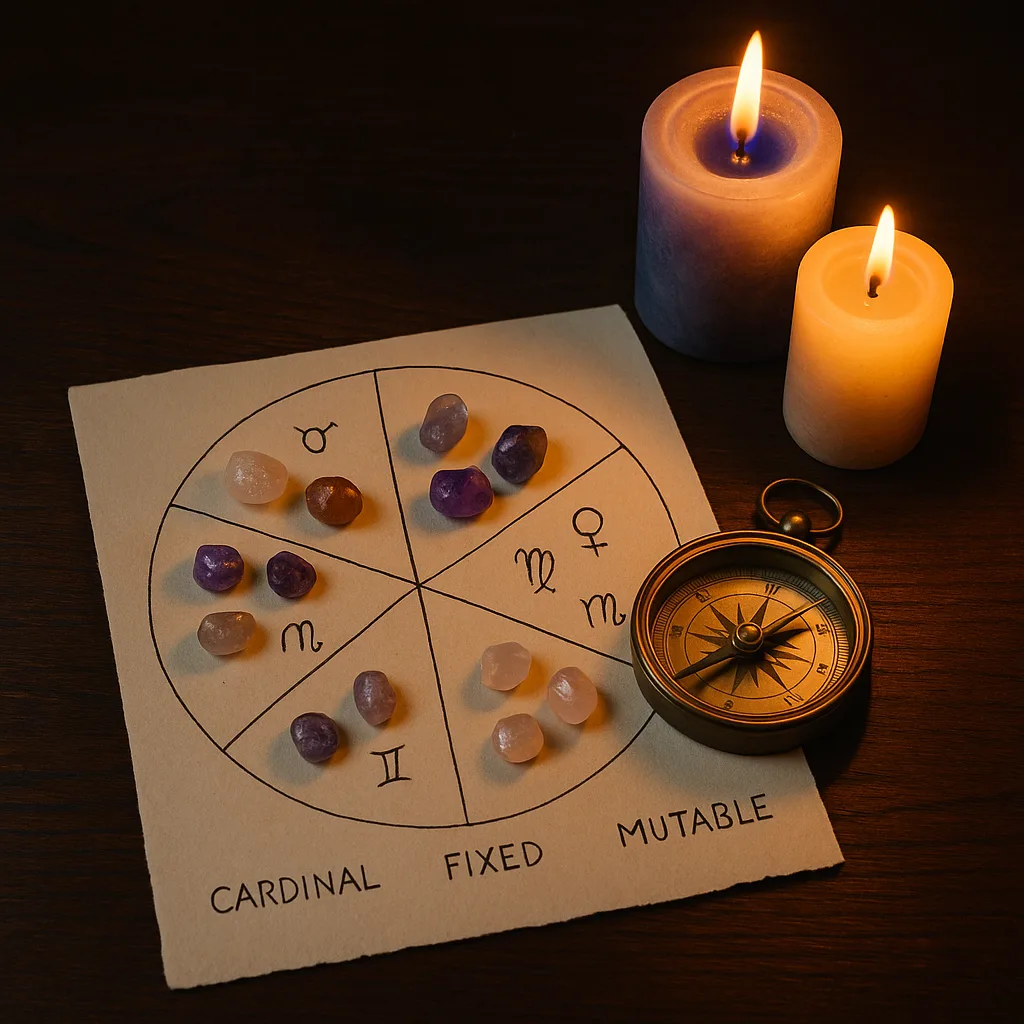
In a professional setting, modality explains something the org chart never shows: who is really competing for informal control of a project. Two cardinal signs (Aries, Cancer, Libra, Capricorn) sharing leadership of the same team almost guarantees quiet friction, since both want to call the shots. The partnership only works if one of them consciously agrees to step back on certain fronts.
Two fixed signs (Taurus, Leo, Scorpio, Aquarius) tend to form partnerships with admirable staying power: when they agree, nothing can move them, which is great for weathering long crises. The problem shows up when they disagree: neither backs down, and the standoff can freeze urgent decisions for weeks. A cardinal sign paired with a mutable one (Gemini, Virgo, Sagittarius, Pisces), on the other hand, tends to work well on execution teams, since one proposes the direction and the other adjusts course as reality shifts, without an ego battle.
Pairings That Tend to Work Well in Partnerships and Teams
Just as there are popular lists of romantic compatibility, observing professional patterns also points to a few recurring combinations, always as a tendency, never as a fixed rule. Capricorn and Taurus, the two most disciplined earth signs in the zodiac, often form partnerships that prioritize financial solidity and long-term planning. Gemini and Aquarius tend to click well on innovation teams, where quickly bouncing ideas around matters more than sticking to a rigid script. Virgo and Scorpio, both analytical in their own way, often form pairs built for meticulous investigation, useful in fields that demand precision, like auditing, research, or quality control.
One example of a challenging but productive combination: Leo in leadership and Virgo running operations. The former brings vision, charisma, and the ability to sell an idea; the latter brings critical thinking and attention to detail that prevents costly mistakes. On their own, they tend to get irritated with each other, since one thinks the other is too slow and the other thinks the first is careless. Together, they form a duo that's hard to beat once they learn to appreciate each other's complementary role.
Professional Synastry: Other Planets Enter the Picture
In astrology applied to romantic relationships, Venus and the Moon usually take center stage in the analysis. In the workplace, the spotlight shifts: Mercury reveals each person's communication style (direct, cautious, roundabout, analytical), Mars shows how someone reacts under pressure and whether they can disagree without fearing conflict, and Saturn points to the sense of responsibility, deadlines, and structure each person carries. Comparing these placements between two charts, whether a business partner's, a boss's, or a colleague's, tends to explain far more precisely why some partnerships flow while others require constant translation.
There's also a detail rarely discussed outside professional astrology circles: overlaps involving the 10th House (career, public reputation) and the 6th House (routine, work, health) of one chart falling over the other person's planets tend to reveal whether a partnership strengthens both people's reputations or quietly drains one of them over time.
What 2026's Transits Suggest for the Workplace
The conjunction between Saturn and Neptune in Aries, one of the year's most talked-about events, tends to push partnerships and teams to abandon overly idealized plans in favor of realistic, sustainable goals. It's a good time to revisit partnership agreements that never got off the ground due to a lack of structure. Meanwhile, Uranus continuing through Gemini favors teams willing to switch tools, test new communication formats, and break away from rigid hierarchies, though it demands patience from those who prefer more predictable routines.
Another important point for anyone dealing with deadlines and negotiations: all three of Mercury's retrogrades in 2026 fall in water signs, Pisces, Cancer, and, between October 24 and November 13, Scorpio. Since Mercury also rules contracts, emails, and meetings, this pattern suggests a year in which workplace communication breakdowns are more likely to stem from emotional misunderstandings than technical disagreements. It's worth paying extra attention to contract signings and major negotiations specifically during that October to November window.
Workplace Compatibility Isn't About Liking Each Other, It's About Function
Perhaps the most important difference between romantic and professional compatibility is this: at work, two people don't need to deeply admire each other to form an excellent partnership. They just need to occupy complementary roles and respect each other's pace. An impulsive fire sign might find, in a cautious earth sign, exactly the brake that was missing to turn an idea into a concrete result. A stubborn fixed sign might learn, from a flexible mutable sign, how to let go of control without losing direction.
The best partnership isn't always the easiest one. It's the one that teaches two different people how to produce something neither of them could have achieved alone.
Before turning down a work partnership just because the signs "don't match" on some popular list, it's worth looking at what each element and modality actually contributes to the shared project. Professional astrology doesn't promise friction-free teams; what it does promise is a map for understanding where the friction comes from and how to turn it into productivity.

Recomendado
MAPA ASTRAL E NUMEROLÓGICO PERSONALIZADO
Mapa Astral + Numerologia Um mergulho profundo na sua essência. E se tudo o que você procura… já estivesse dentro de você - esperando para ser revelado?
Recomendado
Astro Reflexo
Descubra o que os astros revelam sobre quem você é. Em menos de um minuto, calculamos seu Sol, Lua e Ascendente com precisão astronômica e uma inteligência artificial escreve um resumo personalizado só para você.

Recomendado
Mapa Astral Kármico
Você já sentiu que certos padrões se repetem em sua vida? Relacionamentos que seguem o mesmo roteiro, desafios que parecem voltar ou talentos que surgem naturalmente? Nada disso é por acaso.
Universo Astral Editorial Team · Zodiac signs and fun facts
This article was produced by the Universo Astral editorial team, with AI tools assisting research and drafting and human review before publication. If you spot anything inaccurate or outdated, let us know at our contact email.