Reading Your Birth Chart for the First Time? Here's What to Notice Right Away (and What Can Wait)
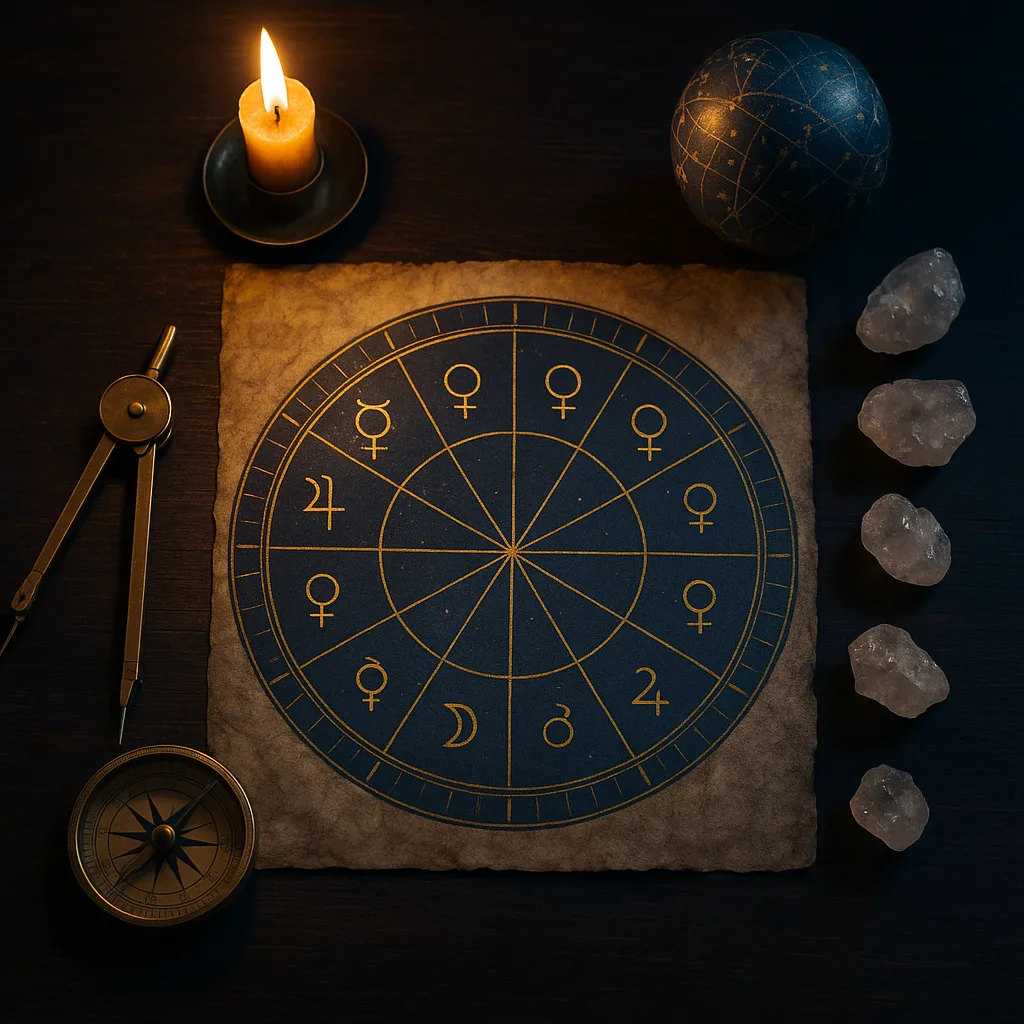
A quick overview of the remaining planets
Once you've absorbed this main trio, it's worth taking a brief look — without diving too deep just yet — at the other planets and their symbolic roles:
- Mercury: how you communicate, reason and absorb information.
- Venus: affection, personal values, and what we find attractive or pleasing.
- Mars: drive to act, willpower and initiative.
- Jupiter: growth, optimism and the areas where we seek to expand.
- Saturn: discipline, limitations and lessons that mature over time.
- Uranus, Neptune and Pluto: deeper, more collective transformative influences that mark entire generations, and therefore carry less individual weight and more relevance to the historical context of your birth.
This last point deserves emphasis: since Uranus, Neptune and Pluto move across the sky very slowly, each stays in the same sign for years — sometimes over a decade. That means these three planets speak more about the generation you belong to than about traits unique to you. So in a first reading, there's no need to dwell on them too much.
The houses: the stage where life unfolds
If the planets are the actors and the signs define the acting style, the houses are the settings. There are twelve sectors in the chart, each linked to a specific area of life — from how we present ourselves to the world to matters of career, relationships and spirituality.
For those just starting out, it's best to focus on the so-called angular houses: 1, 4, 7 and 10, considered the most important in the chart.
- House 1: holds the Ascendant and deals with the image we project on first contact.
- House 4: covers roots, childhood, home and the emotional foundation we come from.
- House 7: reveals how we perceive others, what we look for in partnerships, and what draws us into close relationships.
- House 10: relates to reputation, public image and what we aim to build professionally.
One technical detail explains why a planet sometimes lands in an unexpected house: unlike signs, which always span exactly 30 degrees, houses vary in size. The start of each house can fall at any degree within a sign, which means the celestial division into houses isn't always symmetrical. That's why two people with the Sun in the same sign can have it sitting in completely different houses.
What can wait for a later stage
A common trap for beginners is trying to decode the aspects — the lines connecting planets to one another, forming angles of tension or harmony — right from their very first look at the chart. Aspects are, indeed, an incredibly valuable layer of astrology, almost like the internal dialogue between the different facets of your personality. But they require you to already grasp the individual meaning of each planet before trying to understand the conversation between them. Similarly, analyzing the elements (fire, earth, air and water) and the dominant modalities in your chart is a rewarding exercise, but it pays off far more once you're already familiar with the placement of your Sun, Moon, Ascendant and personal planets. There's nothing wrong with saving these layers for your second or third look at your own chart.
One reading, endless re-readings
Perhaps the biggest lesson for anyone starting out with their own birth chart is this: it's neither necessary nor advisable to try to absorb everything at once. The chart doesn't run dry after a single reading, and revisiting it months or years later, with more experience under your belt, often brings to light layers you missed before.
The sky at the moment you were born stays exactly the same; but your ability to understand it can keep expanding with every new look.
Treat this first approach as an invitation, not a test to pass. Start with the Ascendant, the Sun and the Moon, move quickly through the angular houses, take your time with the personal planets — and leave the rest for future encounters with this chart that, above all, belongs to you.

Recomendado
Curso MAPA ASTRAL
CURSO DESTRAVE SUA VIDA COM MAPA ASTRAL EM ATÉ 08 SEMANAS!