The Four Elements in Astrology: From Greek Philosophy to the Zodiac's Hidden Cycle
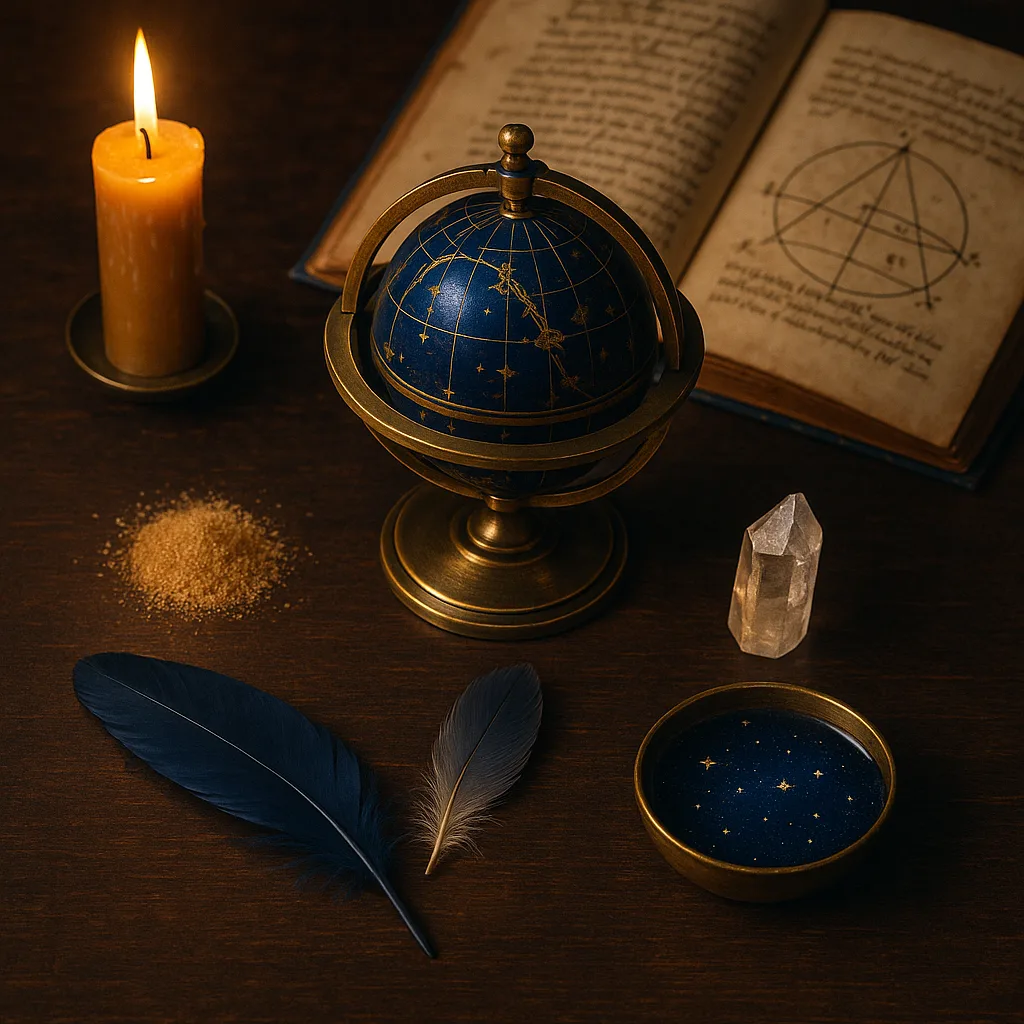
A pattern repeats twelve times around the zodiac, and most people never notice it. Start at Aries and go sign by sign: fire, earth, air, water, fire, earth, air, water, fire, earth, air, water. No two identical elements ever sit next to each other, and the sequence never breaks. This isn't a decorative coincidence. It's one of the oldest structural principles in Western astrology, established long before astrologers ever spoke of retrograde planets or houses.
A theory about the universe, not about personality
The idea that everything in existence is made of four primordial substances didn't originate in astrology. It comes from the Greek philosopher Empedocles, who lived in the 5th century BCE and proposed that fire, earth, air, and water were the roots of all matter, the basic ingredients that made up the cosmos and the human body alike. When Greek astrologers organized the zodiac a few centuries later, they used this theory as the framework to explain why certain signs seemed to share a common texture, even when scattered across different parts of the sky.
The Stoics extended the idea by tying the four elements to body and soul. From that connection came a notable chapter in medical history: Hippocrates, and later Galen, developed the theory of the four humors, blood, yellow bile, black bile, and phlegm, each linked to an element and a temperament. The choleric temperament was tied to fire, the sanguine to air, the melancholic to earth, the phlegmatic to water. For nearly a thousand years, physicians and astrologers shared this same vocabulary to describe both physical illness and personal character.
It's worth clarifying one point so the traditions don't get mixed up: this four-element system is a Greek invention, specific to Western astrology. Chinese astrology and medicine work with a different framework, the five elements: wood, fire, earth, metal, and water, related through cycles of generation and control. They are distant relatives, not the same system.
Triplicities: the geometry behind temperament
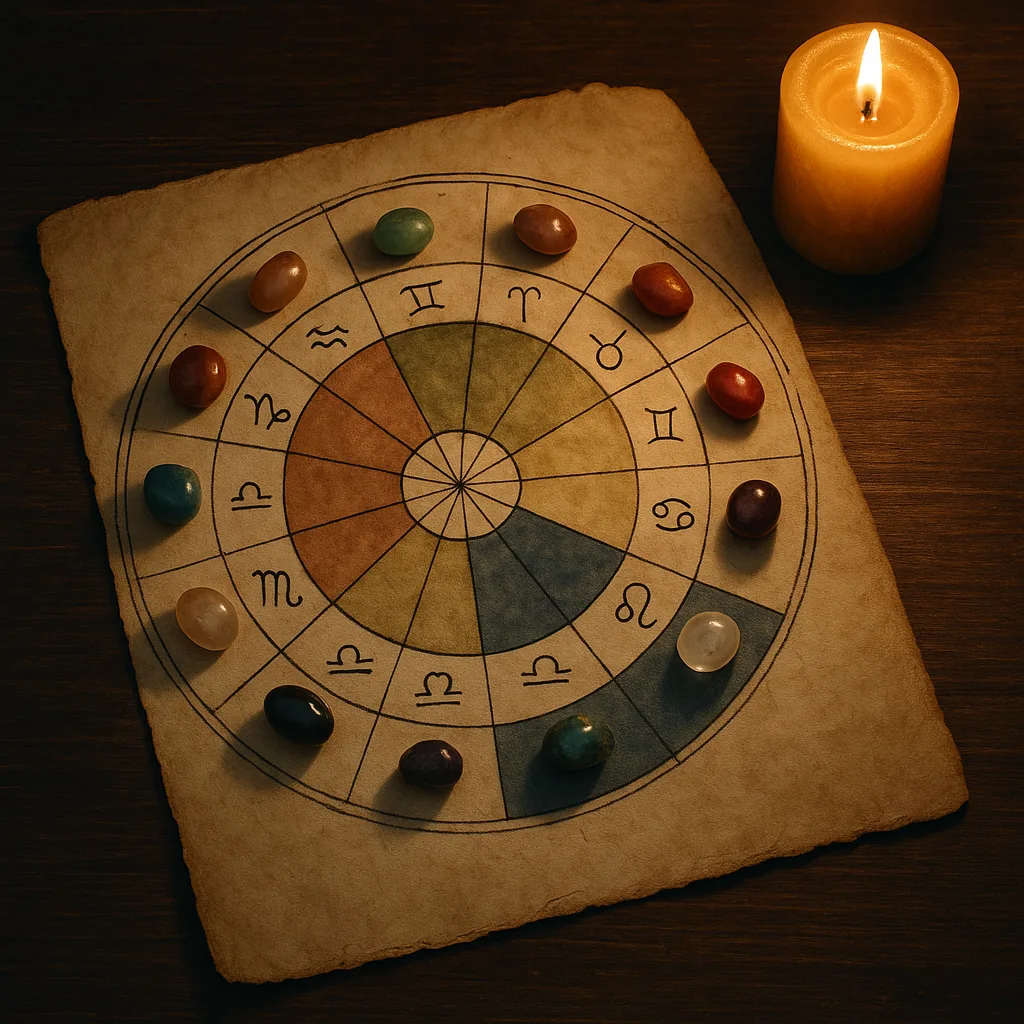
In classical astrology, the elements are called triplicities, because each one groups exactly three signs, spaced 120 degrees apart around the zodiac wheel, an equal distance between all three. Fire groups Aries, Leo, and Sagittarius. Earth groups Taurus, Virgo, and Capricorn. Air groups Gemini, Libra, and Aquarius. Water groups Cancer, Scorpio, and Pisces.
That 120-degree distance has a name and a practical effect: it's called a trine, considered the most harmonious aspect in astrology. That's why signs of the same element tend to understand each other easily, not because they think alike, but because they operate on the same underlying frequency, even if they express it in different ways. An Aries and a Sagittarius might disagree on almost everything, yet they rarely have trouble recognizing the same flame in each other.
The cycle the elements repeat: impulse, form, exchange, dissolution
If triplicities explain the kinship between distant signs, the order in which the elements appear around the zodiac tells a different story: a four-part sequence that repeats three times before the full circle closes.
The cycle starts with fire, the element of impulse and initial spark: the moment of existing, pure desire before any plan takes shape. Next comes earth, which takes that raw energy and gives it substance, structure, and practical use in the real world. Then air takes what has already formed and puts it into circulation, through conversation, ideas, and connections that give social meaning to something that was once just matter. The cycle closes with water, which dissolves all of that into feeling, memory, and emotional meaning, preparing the ground for a new spark of fire.
Reading the elements as four modes of being, rather than personality labels, changes how you interpret a birth chart. A Sun in Aries carries that first impulse of the cycle. A Moon in Cancer carries the last stage, emotional dissolution. Neither is better than the other. They are different phases of the same wheel that keeps turning.
Energy that projects, energy that absorbs
There's a second layer of organization, older and simpler: the divide between active and receptive elements. Fire and air are traditionally read as energies that move outward, they project, initiate, and seek expression in the environment. Earth and water work in the opposite direction, absorbing what's around them before deciding how to respond. This isn't a scale of strength versus weakness, it's a direction of flow. A chart with a predominance of fire and air tends to feel more expansive and vocal. A chart weighted toward earth and water tends to process the world internally before showing any visible reaction.
Why this structure has lasted two thousand years
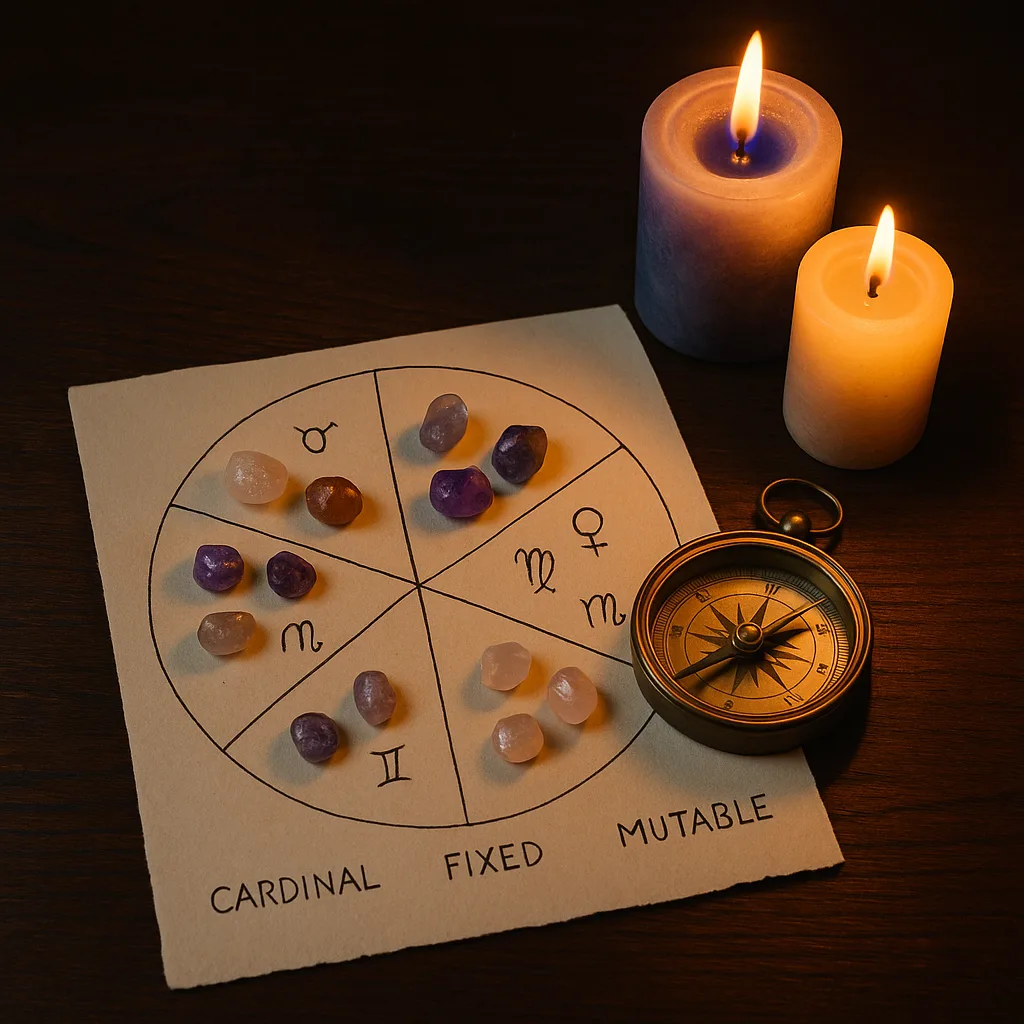
What stands out about Empedocles, the Stoics, and the medieval astrologers who inherited this idea is its economy: with just four categories, later crossed with the three modalities (cardinal, fixed, and mutable), the classical system describes the essential nature of any of the twelve signs using only two words. It's a minimal framework, almost a skeleton, but it's the one on which the rest of astrology, planets, houses, aspects, was later built.
The next time someone says they're a fire person or a water person, that phrase carries a genealogy more than two thousand years old, passing through Greek philosophers, ancient physicians, and generations of astrologers who all worked from the same premise: that there are four fundamental ways of being alive, and recognizing which one dominates in a chart is the first step toward understanding everything else in it.

Recomendado
Manual Prático da Astrologia
O universo sempre exerceu um fascínio indescritível sobre a humanidade. De todas as suas maravilhas, a astrologia se destaca como uma antiga arte que tem intrigado e inspirado gerações.

Recomendado
Astrologia, Simbolismo e Mapa das Personalidades
A astrologia acompanha a humanidade desde as primeiras grandes civilizações. A ideia de que a vida biológica na Terra pode ser influenciada pelos astros gerou e gera grande fascínio no homem.

Recomendado
Zodíaco de Astrologia Kheops Pendulum Mat
Tapete de pêndulo de veludo bordado feito na Índia. O complemento perfeito para encontrar as respostas que seus clientes buscam.
Universo Astral Editorial Team · Zodiac signs and fun facts
This article was produced by the Universo Astral editorial team, with AI tools assisting research and drafting and human review before publication. If you spot anything inaccurate or outdated, let us know at our contact email.