Active or Receptive? The Hidden Logic Behind Astrology's Four Elements
A System Older Than the Planets
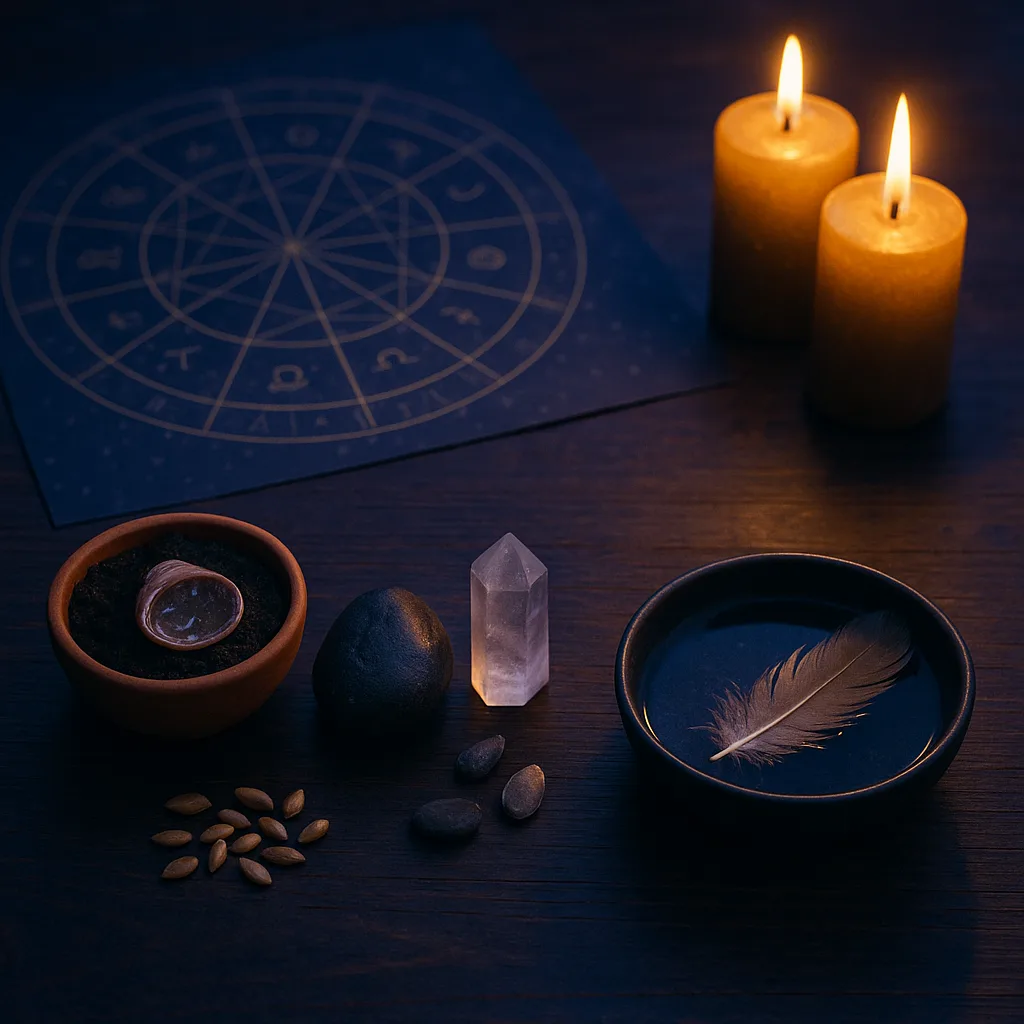
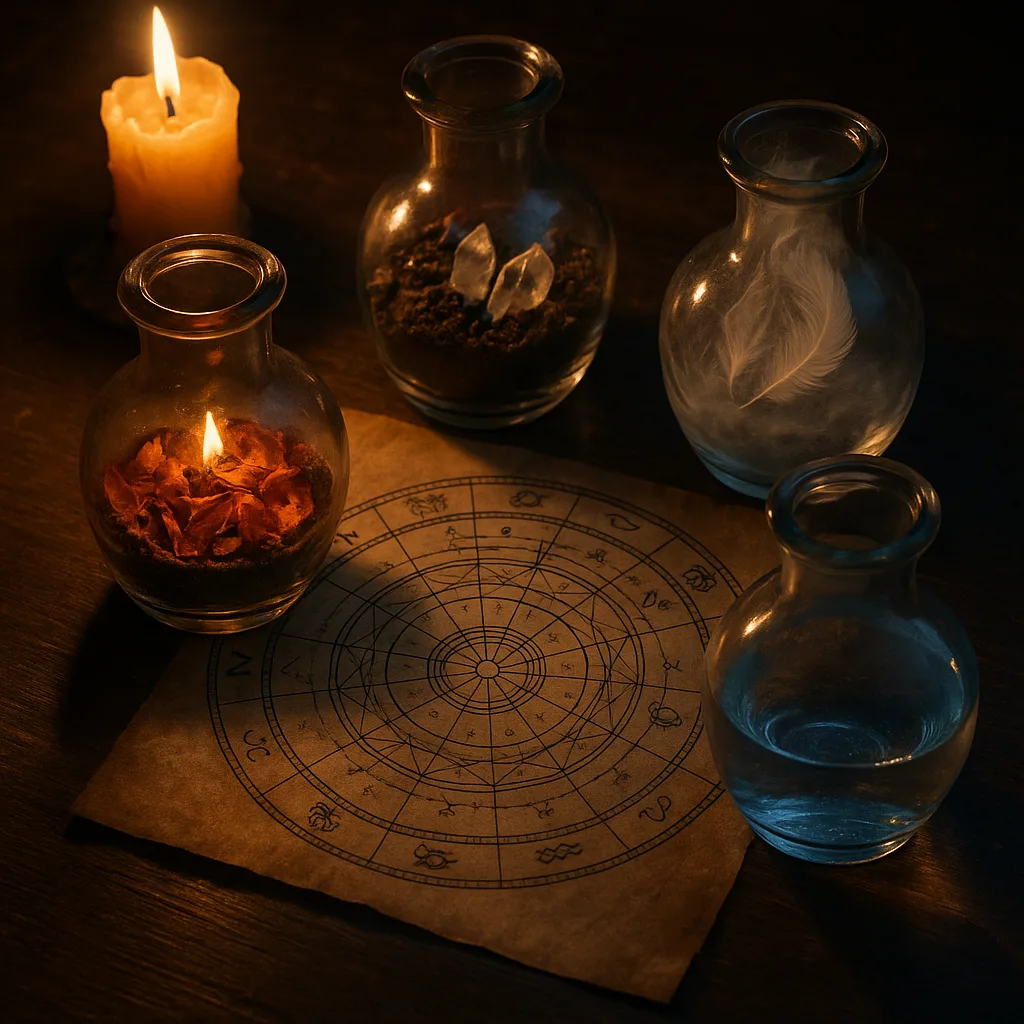
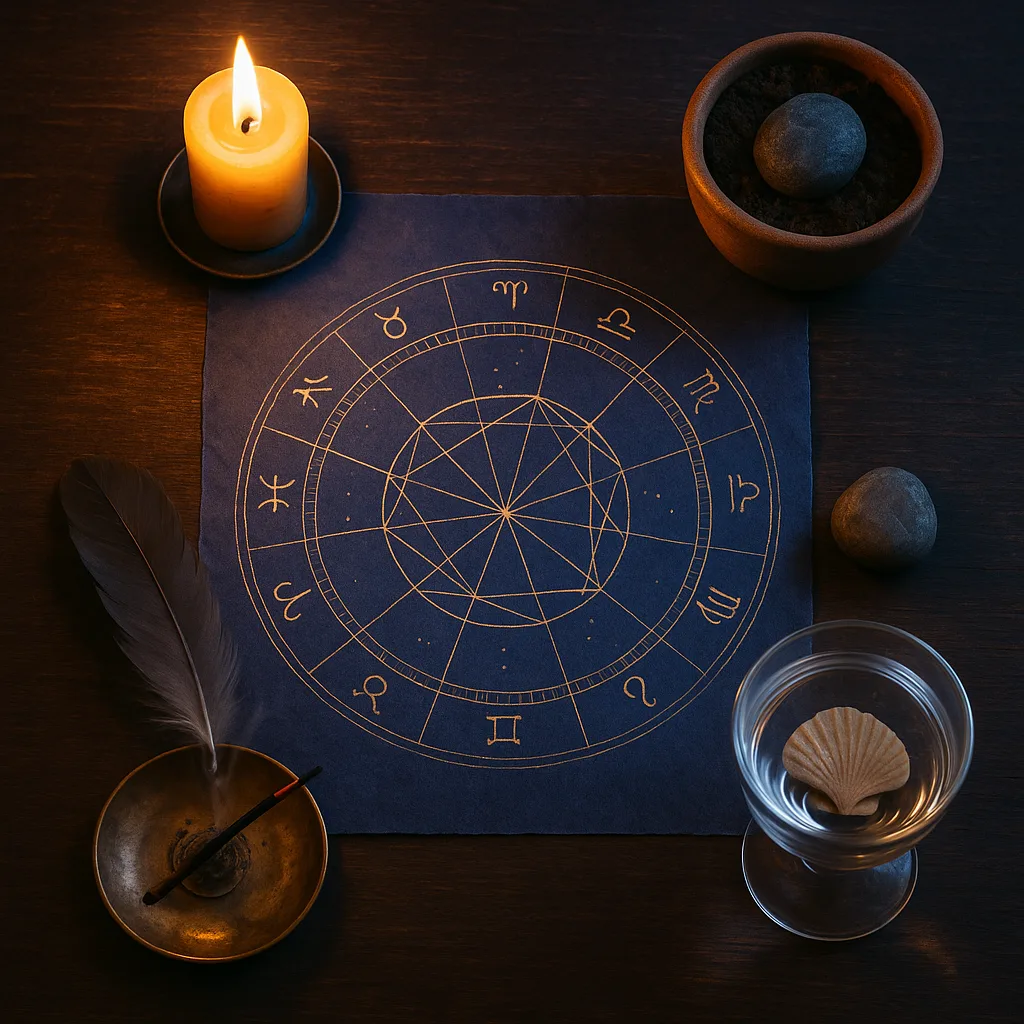
Long before astrology started calculating transits, aspects, or houses, it organized the sky in a simpler way: sorting the twelve signs into four groups of matter. This idea didn't originate in astrology. It came from Greek natural philosophy, particularly from Empedocles, and was later debated by Plato and Aristotle as an attempt to explain what the physical world is made of. The Stoics adopted this framework and applied it to the human body and soul. Centuries later, Ptolemy folded that logic into astrology in the Tetrabiblos. Fire, Earth, Air, and Water are the oldest foundation of the zodiac, predating any discussion of Mercury retrograde or astrological houses.
Chinese astrology and Feng Shui follow a similar logic but use five elements: Wood, Fire, Earth, Metal, and Water. This shows that the impulse to sort the world into essential building blocks appears across different civilizations, each with its own symbolic system.
The Order in the Zodiac Isn't Random
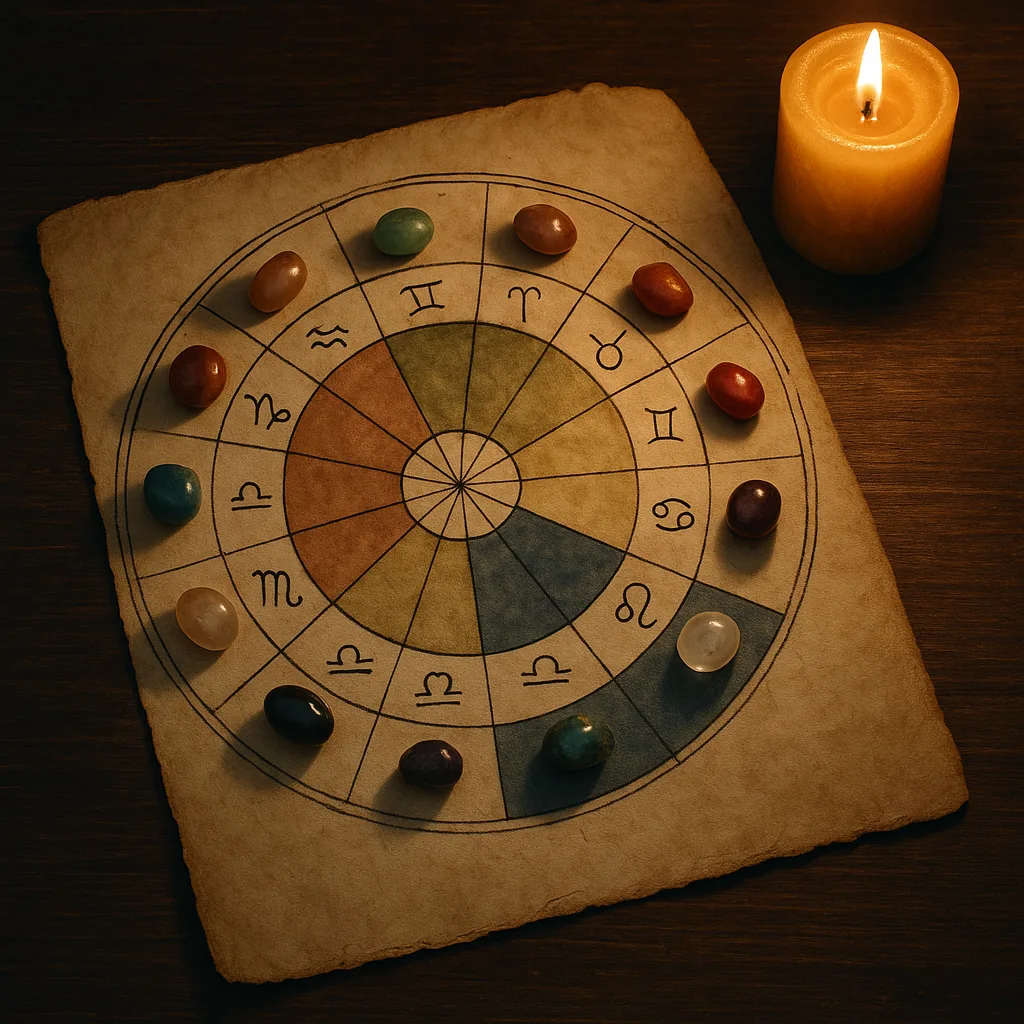
If you scan the zodiac wheel from start to finish, you'll notice the elements repeat in a fixed sequence: Fire, Earth, Air, Water, then Fire again, restarting the cycle at Aries. That sequence tells a small story about how anything is born and transforms. Fire (Aries) is the spark, the initial impulse. Earth (Taurus) follows to give that impulse shape and substance, turning pure will into something material. Air (Gemini) spreads that form into the world of ideas and exchange. Water (Cancer) closes the first trio by dissolving everything into feeling, absorbing the experience before the cycle begins again with fresh Fire in Leo.
This pattern repeats three times around the zodiac, which is why, in classical language, the elements are also called triplicities: each one gathers three signs positioned exactly one hundred twenty degrees apart, forming a triangle on the wheel.
Yin and Yang: The Polarity Few People Mention
Here's an angle that usually gets skipped in more basic explanations of the elements: they don't just form four separate groups, they form two families of energy. Fire and Air are considered active, or yang, elements: energy that moves outward, that initiates contact with the world and reacts before thinking twice. Earth and Water, on the other hand, are receptive, or yin: they absorb, process internally, and only respond afterward.
This polarity explains a lot that a simple list of traits doesn't capture. An Aries (Fire) and an Aquarius (Air) might look like opposites at first glance, one intense and impulsive, the other detached and cerebral, but both share that same outward orientation, that same discomfort with sitting still. A Cancer (Water) and a Virgo (Earth) often understand each other quietly, with no need to perform anything, because both process life from the inside out before they act.
Why Trines Are the Sky's Most Effortless Aspect
When three signs share the same element, like Aries, Leo, and Sagittarius in Fire, the exact one hundred twenty degree distance between them forms what astrology calls a trine, widely considered the most harmonious aspect of all. People with their sun, moon, or rising sign in that trio tend to recognize each other almost instantly: they speak, at their core, the same emotional language, even with very different personalities.
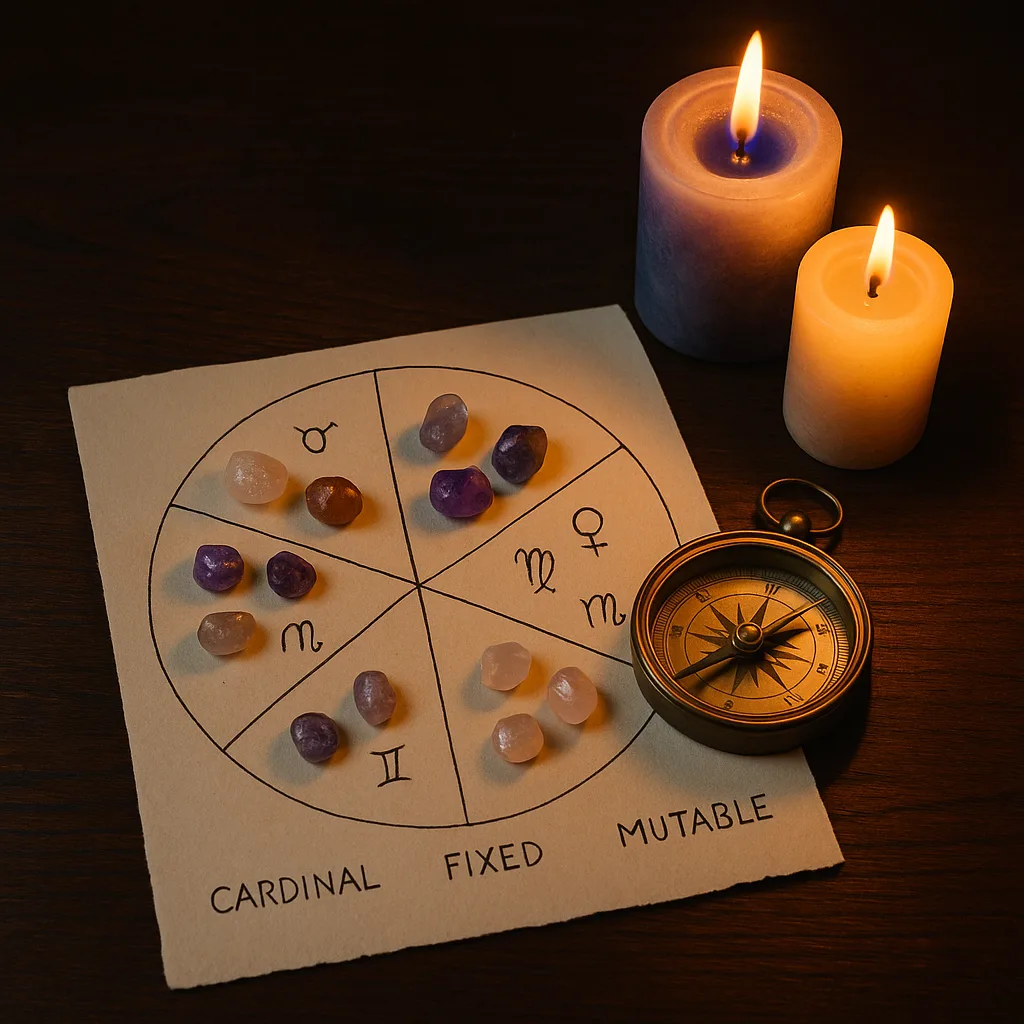
That's why the elements reveal what a sign is made of, while the modalities, cardinal, fixed, and mutable, reveal how it moves through the world. Aries and Sagittarius are both Fire, but one is cardinal (it initiates) and the other mutable (it adapts). Understanding that two-layer combination is what gives a chart reading real nuance, instead of flattening everything into generalizations.
What Each Element Carries and Where It Stumbles
Fire (Aries, Leo, Sagittarius) is the element of passion and initiative: it acts first and evaluates later, with a rare gift for genuinely getting excited about being alive. In excess, that same urgency turns into chronic impatience and trouble waiting out any slower process.
Earth (Taurus, Virgo, Capricorn) brings groundedness, patience, and self-discipline. It's the element that knows how to build something lasting, anchored in the five senses and the material world. Its shadow side shows up as excessive attachment to security: little openness to the new, rigid conservatism, difficulty letting go of control.
Air (Gemini, Libra, Aquarius) governs intellect, communication, and the exchange of ideas. It's the element that needs to circulate, talk, connect the dots. In excess, it creates real emotional distance, a tendency to intellectualize everything rather than truly feel it.
Water (Cancer, Scorpio, Pisces) rules the emotional world in its full range: joy, boredom, ecstasy, melancholy all belong to this territory. Water's challenge is never to feel less, but to learn how to regulate what it feels without letting emotion hijack the response, to feel fully and still act with intention.
How to Read This in Your Own Chart
No one is defined by a single element, not even by the element of their sun sign. What matters is looking at how the planets across the whole chart, including the Moon and Rising sign, are distributed among the four groups. When one element shows up again and again, it usually points to a natural strength, an almost automatic talent. When an element is barely present or missing altogether, that's not a flaw. It simply marks an area that likely requires more conscious effort and learning, rather than coming pre-installed.
Looking at a chart through this elemental lens, crossing active with receptive, Fire with Water, Earth with Air, tends to reveal behavior patterns more accurate than any isolated sun-sign reading, because it shows not just who you are, but how your different inner parts talk to, or clash with, one another.

Recomendado
Manual Prático da Astrologia
O universo sempre exerceu um fascínio indescritível sobre a humanidade. De todas as suas maravilhas, a astrologia se destaca como uma antiga arte que tem intrigado e inspirado gerações.

Recomendado
Astrologia, Simbolismo e Mapa das Personalidades
A astrologia acompanha a humanidade desde as primeiras grandes civilizações. A ideia de que a vida biológica na Terra pode ser influenciada pelos astros gerou e gera grande fascínio no homem.
Recomendado
Astro Reflexo
Descubra o que os astros revelam sobre quem você é. Em menos de um minuto, calculamos seu Sol, Lua e Ascendente com precisão astronômica e uma inteligência artificial escreve um resumo personalizado só para você.
Universo Astral Editorial Team · Zodiac signs and fun facts
This article was produced by the Universo Astral editorial team, with AI tools assisting research and drafting and human review before publication. If you spot anything inaccurate or outdated, let us know at our contact email.