Life Path Number in Numerology: A Step-by-Step Guide to Calculating It
A sum that fits in the palm of your hand
Take your full birth date, add up all the digits, and reduce the result to a single number. It is basic addition, the kind any elementary school student could do, yet this simple calculation has sat at the heart of Pythagorean numerology for centuries. The number left over at the end of this process is known, in most popular sources, as the Life Path Number, also called the Destiny Number. That is mainly what this article covers.
First, a necessary clarification: the phrase personal number gets used in two different ways within numerology, and it confuses even people who have studied the subject for a while. There is the fixed number, calculated once from your full birth date, which is the focus of this article. And there is the Personal Year, which changes every year and follows a nine-phase cycle. These are separate concepts, calculated differently and used for different purposes. We will cover the first one in detail and explain briefly, toward the end, how it relates to the second.
What the Life Path claims to reveal
In popular numerology sources, the Life Path is treated as the single most influential number in the entire numerology chart, something like the backbone of personality. The claims made about it are broad: it is said to point to natural talents, the challenges a person tends to face while maturing, the most favorable moments to take action, and how someone typically relates to others. This is symbolic, motivational language, in the spirit of self-knowledge systems, not a scientifically precise formula. That distinction matters when interpreting any result.
A numerologist quoted in articles on the subject sums up this point: the Life Path does not change over a lifetime, but the way each person lives out that energy shifts from year to year. In that sense, numerology works less like a sealed prophecy and more like an invitation to notice patterns, a tool for guidance rather than automatic prediction.
Step by step: how to calculate yours
The traditional method, also called the Pythagorean method, follows a straightforward logic:
- Write out your full birth date: day, month, and year.
- Add up every digit, one by one, without separating day, month, and year.
- If the result has more than one digit, add those digits together again.
- Repeat until you reach a number between 1 and 9, or until you land on 11, 22, or 33, which get special treatment (more on that below).
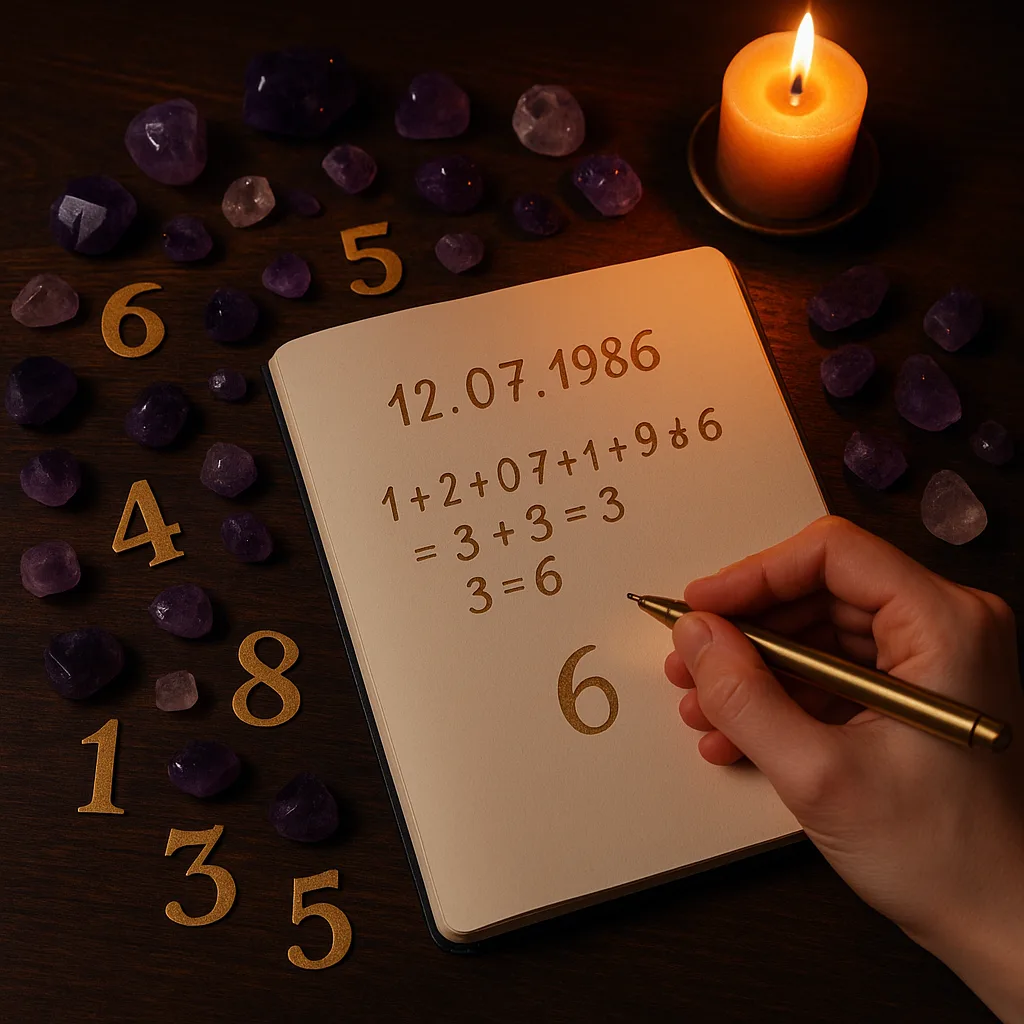
An example makes this concrete: for someone born on April 23, 1981, the sum would be 4+2+3+1+9+8+1, which equals 28. Since 28 still has two digits, add again: 2+8, giving 10. Since 10 also needs reducing, add 1+0, and the final result is 1. That person would have a Life Path of 1.
There is also a more elaborate variant, called by some schools the Three Cycles Method. In this approach, the day, month, and year of birth are each reduced separately to a single (or master) number, and only then are those three partial results added together and reduced again to reach the final number. It is a longer process that usually arrives at the same result, but some numerologists prefer it because it also allows them to examine the three life cycles (youth, maturity, and later years) individually.
The numbers that break the rule: 11, 22, and 33
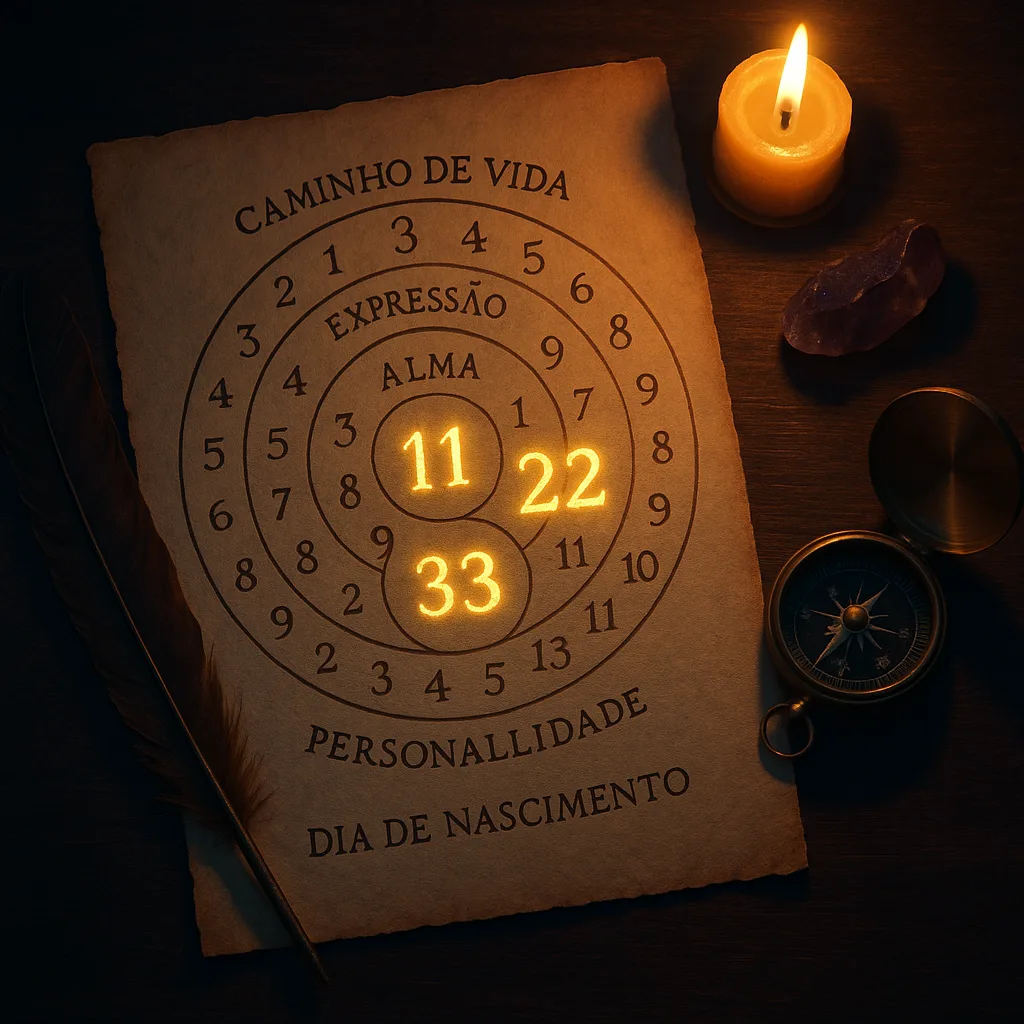
There is one important exception in this reduction process: whenever a sum, at any point in the calculation, comes out to 11, 22, or 33, most numerology schools recommend not reducing those numbers to a single digit. These are called master numbers, and tradition holds that they carry a more intense, and more challenging, spiritual meaning: 11 is linked to heightened intuition and sensitivity, 22 to the potential for building something of major practical impact, and 33 to a calling for care and service to others.
Not every school agrees on all three. Some numerology calculators and systems, like Astro-Seek, recognize only 11 and 22 as master numbers, leaving 33 out entirely or treating it as a less widely accepted variation. So if you calculate your number and get a master number in one version but a plain single digit in another, that is not a mistake. It simply reflects different schools of thought within the same field.
A quick snapshot of each number
Every result from 1 through 9, plus the master numbers, carries, in numerology literature, a kind of temperament and purpose summary. Here is a quick rundown for anyone starting to explore their own number:
- 1: initiative, independence, and the drive of someone who tends to blaze new trails.
- 2: sensitivity, cooperation, and a natural talent for mediating and building bridges.
- 3: self-expression, creativity, and a communication style that aims to light up the room.
- 4: discipline, structure, and a calling to build something solid and lasting.
- 5: freedom, movement, and a curiosity that rarely settles down.
- 6: caretaking, emotional responsibility, and a strong bond with family and community.
- 7: introspection, a search for meaning, and a leaning toward deep analysis.
- 8: ambition, personal power, and a knack for handling money and management.
- 9: generosity, big-picture vision, and a calling to close cycles and serve the collective.
These descriptions work as a starting point, not a final verdict. The interpretation gains depth when cross-referenced with other elements of your numerology chart, such as your name number, calculated from the values assigned to each letter in the Pythagorean table.
Why you shouldn't confuse it with the Personal Year
Unlike the Life Path, which is calculated once and stays the same for life, the Personal Year changes every year and follows a nine-phase cycle that repeats continuously. It is calculated by adding your birth day and month to the current year. For example, someone born on March 8, for the year 2026, would add 8 (day) plus 3 (month) plus 10 (the result of 2+0+2+6), reaching 21, then 2+1, resulting in 3.
Numerologists also disagree on when this cycle actually begins. One school holds that the Personal Year only starts on the person's birthday; someone born in May, for instance, would still be under the previous year's energy until that date. Another school follows the calendar year, from January to December, aligning the calculation with the so-called Universal Year, the number governing the collective for that year, also obtained by adding up the digits of the calendar year itself. There is no settled consensus on which approach is correct. It is a difference in method between schools, not a calculation error.
What to actually do with this number
Getting the result of the calculation is only the beginning. The value of this tool lies in observing, over time, whether the traits associated with your number show up in your own experiences: the moments when the courage of a 1 surfaced, or when the introspection of a 7 demanded attention. Many practitioners recommend writing down these observations for a few months before drawing firm conclusions, treating the number less as a fixed label and more as a recurring invitation to self-reflection. This patient, less urgent use of numerology tends to yield the most interesting discoveries, not the search for an instant answer, but the habit of revisiting your own number at different stages of life and noticing what it still has to say.

Recomendado
MAPA ASTRAL E NUMEROLÓGICO PERSONALIZADO
Mapa Astral + Numerologia Um mergulho profundo na sua essência. E se tudo o que você procura… já estivesse dentro de você - esperando para ser revelado?

Recomendado
Mapa Astral & Mapa Numerológico
Descubra seu número da sorte e previsões sobre o seu futuro.
Recomendado
Astro Reflexo
Descubra o que os astros revelam sobre quem você é. Em menos de um minuto, calculamos seu Sol, Lua e Ascendente com precisão astronômica e uma inteligência artificial escreve um resumo personalizado só para você.
Universo Astral Editorial Team · Birth charts and numerology
This article was produced by the Universo Astral editorial team, with AI tools assisting research and drafting and human review before publication. If you spot anything inaccurate or outdated, let us know at our contact email.