Temples of the Sky: Ancient Observatories That Hold Humanity's First Conversations with the Stars
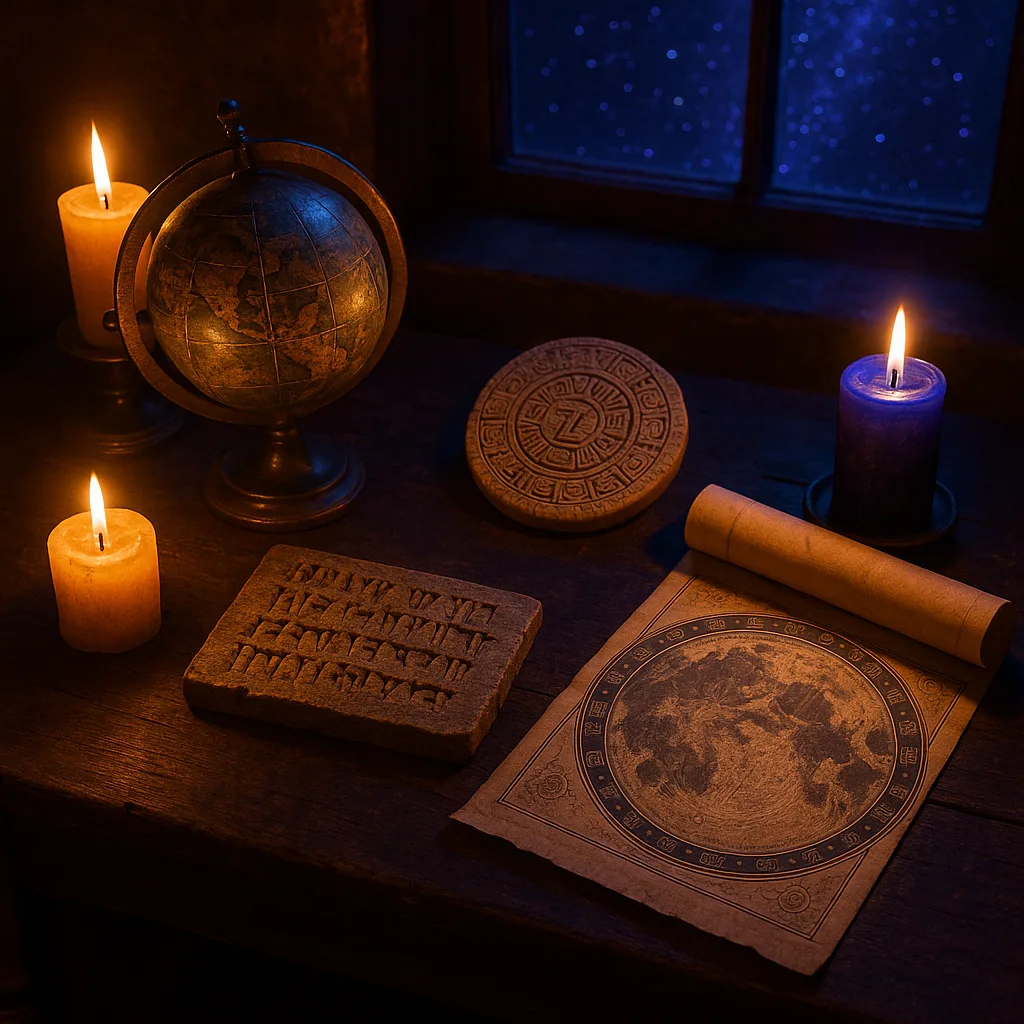
Long before birth charts, planetary glyphs, or transit apps existed, there were people standing in the dark, watching where the Sun rose. Some of these observers left lasting marks: stone circles, aligned corridors, wooden posts driven into the ground with a precision that still impresses archaeologists and astronomers today. These places are today's subject — not as proof of anything supernatural, but as testimony to an ancient and universal relationship between human beings and the sky.
Archaeoastronomy: a young science studying very old questions
The discipline that investigates these connections is called archaeoastronomy, and it's a relatively recent field within academia. Researchers cross-reference archaeological data with astronomical calculations to figure out whether a particular arrangement of stones, posts, or corridors was really designed to mark a celestial event — like a solstice — or whether it's just geometric coincidence.
It's important to be clear about this: most of these readings are hypotheses, built on evidence and debated among experts, not settled certainties. At several of the most famous sites on the planet, there's genuine disagreement about what those structures actually meant to the people who built them. And it's precisely this mix of mystery, method, and imagination that makes this field so fascinating.
Nabta Playa: the stone circle that may be Earth's oldest observatory
In southern Egypt, about 700 miles from the Great Pyramid of Giza, there's a rock formation that may be more than 7,000 years old. Nabta Playa is considered the oldest stone circle ever found — and, for many researchers, the oldest known astronomical observatory in human history. It's believed to have been built by a nomadic cattle-herding people, likely to mark the summer solstice and predict the arrival of the monsoons, essential for survival in the desert.
Archaeoastronomer J. McKim Malville, of the University of Colorado, described the site as humanity's first serious attempt to establish a conscious connection with the heavens — what he called the dawn of observational astronomy. The discovery itself had an element of chance: in 1974, anthropologist Fred Wendorf was returning from an expedition in Libya and nearly drove right past the rock formation without noticing its significance.
Some hypotheses suggest the stones were aligned with stars such as Arcturus, Sirius, and Alpha Centauri, along with blocks that may correspond to the constellation Orion. There's also an elegant technical explanation: since Nabta Playa sits close to the Tropic of Cancer, the midday Sun reaches its highest point — the zenith — about three weeks before and after the summer solstice, a moment when vertical objects cast almost no shadow at all. The circle's upright stones may have been placed precisely to mark this rare phenomenon.
But not everything about this site is settled. A 2007 paper by archaeoastronomers from the University of Colorado — some of whom took part in the original discovery — challenged dating estimates proposed earlier by other researchers, pointing to a discrepancy of about 1,500 years from what had previously been believed. This same group publicly criticized more speculative theories, such as the idea that the site represented the Milky Way as far back as 17,500 BCE or that it had a connection to extraterrestrial life, reinforcing that any inference in archaeoastronomy must be guided by archaeology, not imagination. Today, the main stones have been removed from the desert and are housed in a museum in Aswan, protected from vandalism.

Recomendado
Astrologia, Simbolismo e Mapa das Personalidades
A astrologia acompanha a humanidade desde as primeiras grandes civilizações. A ideia de que a vida biológica na Terra pode ser influenciada pelos astros gerou e gera grande fascínio no homem.

Recomendado
Manual Prático da Astrologia
O universo sempre exerceu um fascínio indescritível sobre a humanidade. De todas as suas maravilhas, a astrologia se destaca como uma antiga arte que tem intrigado e inspirado gerações.